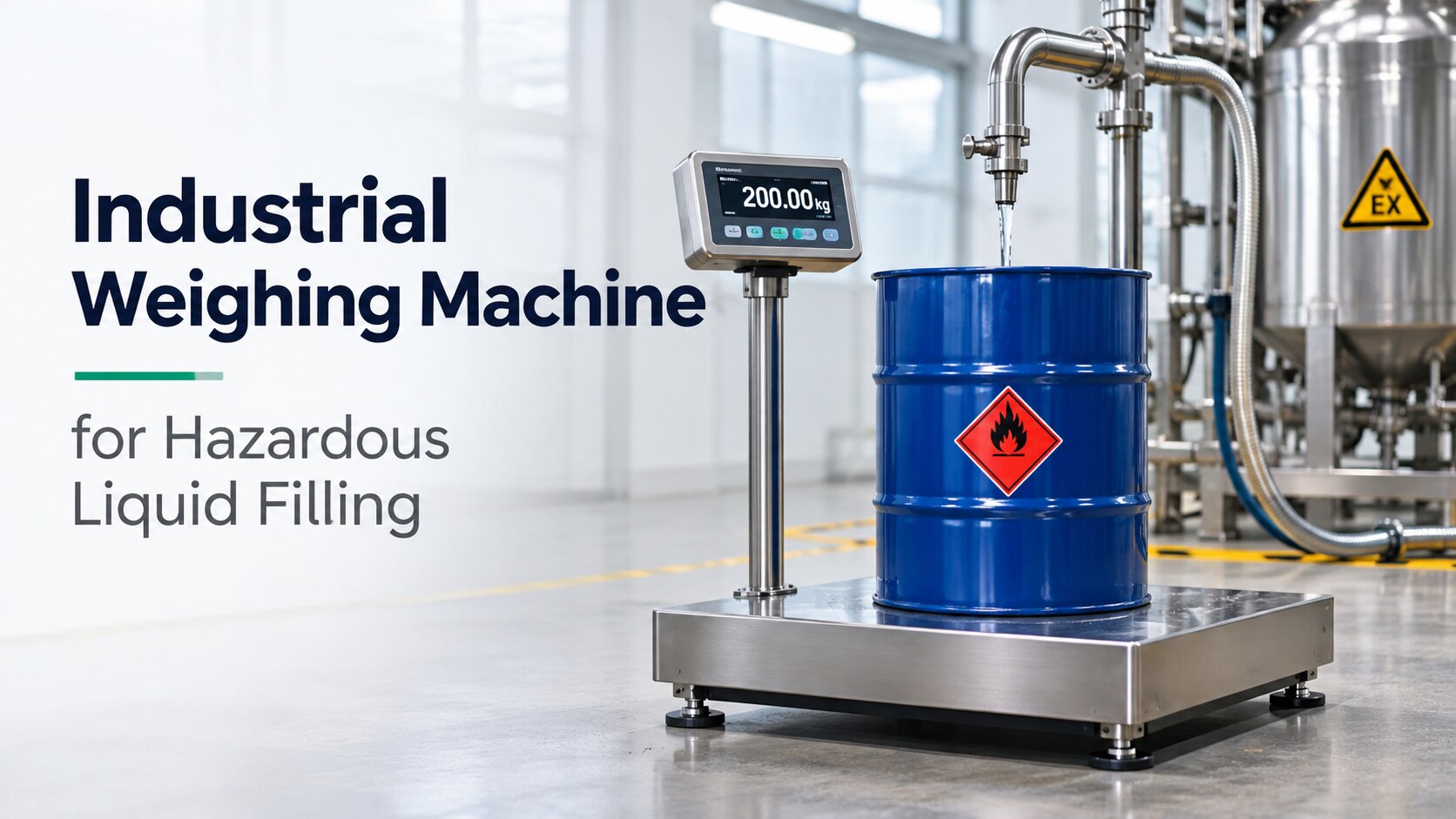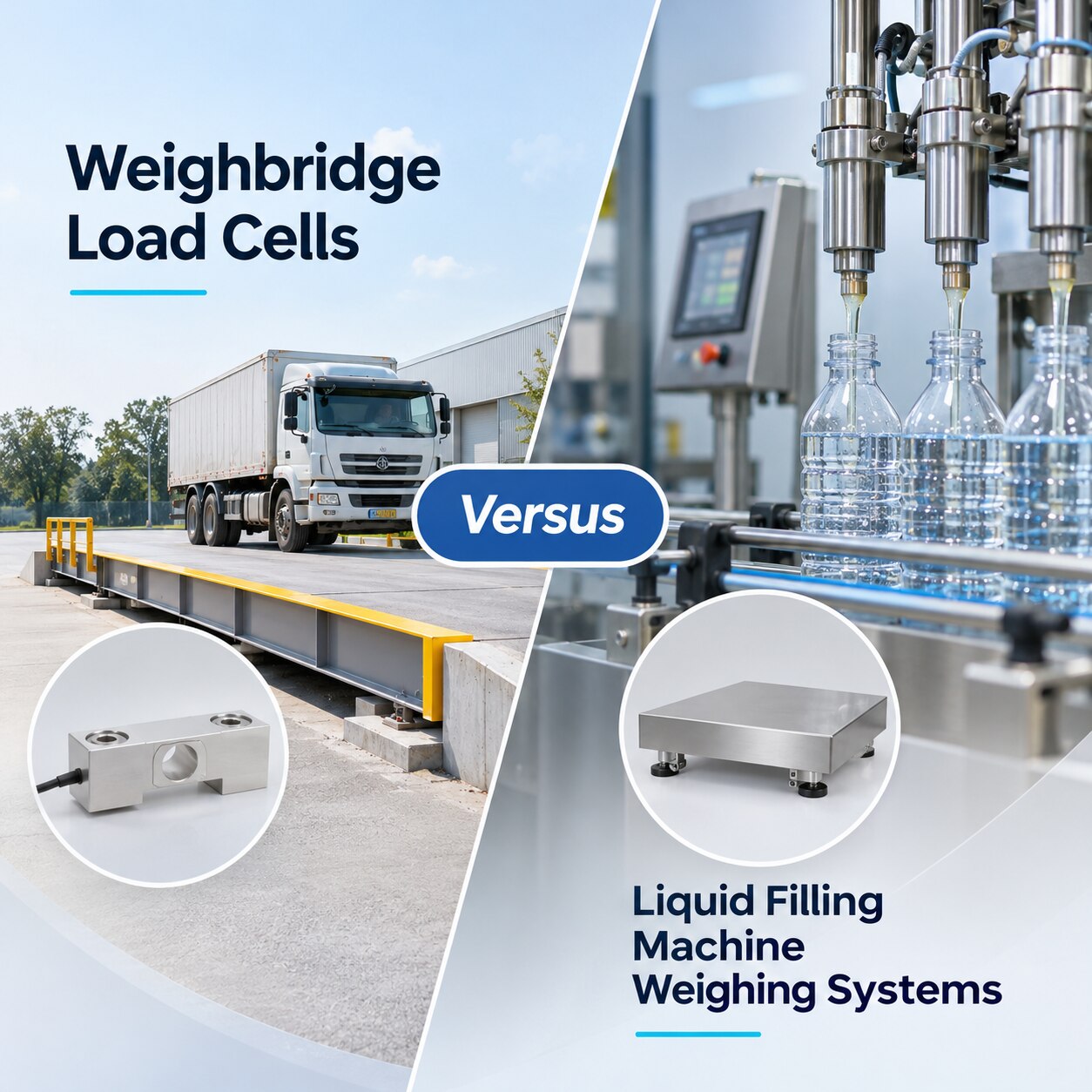
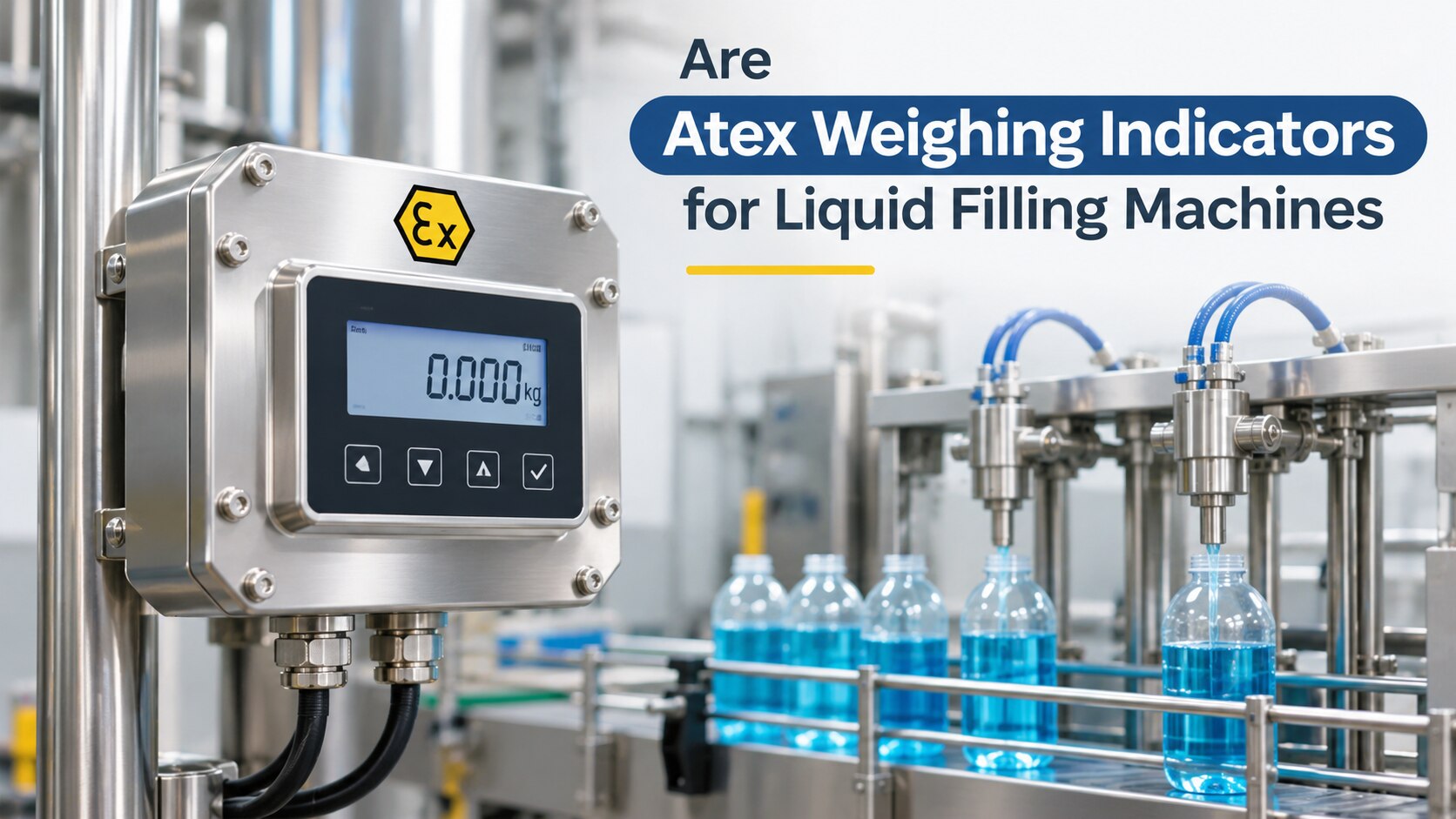
The right indicator depends on the atmosphere around the filling point, not on the fact that the product is liquid. By the end, you will be able to match the certificate and zone classification to the machine layout, judge the filling functions that affect accuracy, and compare the cost of hazardous-area equipment with a remote-control design.
Key takeaways
- Require ATEX equipment when vapour, gas or dust can form an explosive atmosphere.
- Map each machine component to its classified zone; Zone 2–22 is not a layout plan.
- Compare vessel, load-cell capacity, accuracy, certificates and wiring before choosing an indicator.
- Pay the ATEX premium when one ignition source could stop production or endanger workers.
When does a liquid filling machine actually need ATEX equipment?
A liquid product alone does not create an ATEX requirement; an ATEX weighing indicator for liquid filling machine is necessary only when the filling process can create an explosive gas, vapour or dust atmosphere where the equipment is installed.
The ATEX Equipment Directive covers equipment and protective systems intended for potentially explosive atmospheres. A separate workplace assessment classifies the site and records controls in the explosion-protection document. The certificate proves equipment suitability; it does not prove that the installation, wiring or zoning is compliant.
- Classify the location. Gas and vapour Zones 0, 1 and 2 mean continuous or frequent presence, likely presence during normal operation, and unlikely presence limited to a short period. Dust Zones 20, 21 and 22 follow the same pattern for dust clouds. Frequency and duration determine the equipment category or protection level required.
- Check the certificate for the certificate number, equipment group, category, protection concept such as intrinsic safety, gas or dust group, temperature class and permitted ambient-temperature range.
- Check the separate purchase requirements. ATEX approval controls ignition risk, not weighing performance, legal-for-trade approval, accuracy class, repeatability or hygienic design. Confirm metrological approval, load-cell compatibility, resolution and calibration requirements.
- Decide whether the indicator and associated circuits sit inside the classified area. If they do, match the certification to the zone and atmosphere. If the indicator can sit outside the zone, certified intrinsically safe interfaces may avoid a fully rated panel.
The word “liquid” is not proof of ATEX necessity; the site assessment is.
Does “Zone 2–22” match the physical machine layout?
“Zone 2–22” is not precise enough to approve a filling installation. It combines gas/vapour and dust zone numbers without showing where the atmosphere exists or which equipment sits inside it.
Map the physical layout before comparing certificates:
- Mark possible vapour or dust accumulation at the filling head, vessel vents, drum connection, pump, valve and every transfer point.
- Record whether the indicator itself is in Zone 0, 1 or 2 for gas and vapour, or Zone 20, 21 or 22 for dust.
- Check the load cells, junction box, solenoid valves, pumps, cable glands, barriers or isolators and field wiring separately; one zone label does not cover every component automatically.
- Identify whether conductive vessels, drums, pipework and filling equipment are bonded and earthed, especially when handling flammable liquids through nonconductive hoses.
The cleaner design places the display and controller outside the classified area, leaving certified load cells, junction boxes and other field devices inside it. The intrinsic-safety signal path still needs a compatible assessment covering the indicator, barrier, wiring capacitance and inductance, earthing and connected devices. A generic isolator cannot make an ordinary indicator intrinsically safe.
Treat a hazardous area weighing indicator as part of a complete circuit and machine layout, not a standalone purchase. If the pipework, hose or drum can retain a static charge, an ATEX rating on the indicator does not remove that ignition source.
How does an ATEX indicator affect the actual filling cycle?
An atex indicator for liquid filling controls the sequence, not merely the displayed weight. It captures the container tare, confirms stable zero, opens bulk flow, switches to dribble or fine filling, then cuts off at target weight. After settling, it records the final gross or net weight, checks tolerance, and releases the container.
Pump coast, valve delay, trapped liquid and product splashing require recipe-specific cutoff compensation.
Specify these control functions:
- Motion detection, zero tracking, automatic cutoff, high- and low-tolerance alarms, and setpoint outputs
- Relay control or analogue/digital communication to the PLC, pump and valve interfaces
- Multi-speed filling, overfill compensation, batch records and recipe management
Foam, entrained air, changing viscosity and temperature can make measured weight fluctuate after the correct mass has entered the vessel. Too little digital filtering causes unstable or premature cutoffs; too much delays control. Judge filled-weight repeatability at the required cycle time, not headline display resolution.
| Method | Strength | Main error when conditions change |
|---|---|---|
| Weight-based | Measures delivered mass directly | Foam, settling and splashing disturb the signal |
| Volumetric | Delivers a defined volume | Density and temperature changes alter mass |
| Flowmeter-based | Controls measured flow | Viscosity, entrained air and calibration affect volume |
| Time-based | Simple pump or valve timing | Pump rate, viscosity, pressure and valve delay change quantity |
ATEX approval controls ignition risk, not accuracy, repeatability, fill tolerance, legal-for-trade suitability or hygienic design. Check metrological approval, load-cell compatibility, update rate and calibration separately.
Which vessel, load cells and documents determine weighing performance?
The indicator can meet your fill tolerance only when vessel capacity, load-cell capacity and mechanical installation are matched. Select capacity above the maximum vessel, product and tare load, then check usable resolution, accuracy class, verification interval and required legal-for-trade approval. A high-resolution display cannot correct poor load transfer.
| Installation feature | Weighing risk | What to verify |
|---|---|---|
| Vessel supports | Unequal loading creates eccentric errors | Correct load-cell arrangement, level supports and mounting instructions |
| Agitator and pipework | Vibration and pipe strain shift the reading | Flexible connections, supported rigid pipes and sufficient settling time |
| Hoses and transfer lines | Residual liquid stays in the measured mass or drains after cutoff | Hose routing, unsupported spans, drain points and cutoff behaviour |
| Stops, conduits and glands | Mechanical contact transfers force into the vessel | Clearance, cable flexibility and freedom from hard contact |
Rigid pipes, cable conduits, mechanical stops and unsupported hoses can create errors larger than the indicator’s displayed increment. Check foam, splashing and agitator operation during a repeatability test, not only an empty-vessel calibration.
Request these documents before purchase or installation:
- Indicator manual, approved load-cell list and wiring diagram
- Certificate, installation instructions and communication-protocol list
- Accuracy class, capacity, readability, update rate and calibration procedure
- Verification interval and national legal-metrology requirements
- Control outputs and confirmed filling-machine interfaces
Judge documented suitability. An omitted catalogue specification is an information gap, not proof of incompatibility. Confirm the complete signal path and load-cell compatibility with the proposed vessel.
When is the ATEX premium worth paying?
Pay the ATEX premium when the indicator or its associated circuits must sit inside a classified zone, and its certificate matches the zone, gas or dust group, temperature class and ambient range. A cheaper non-approved unit can compromise the machine’s conformity assessment and introduce an ignition source.
Do not assume a fully hazardous-area-rated panel is the best value. If the display and controller can sit outside the zone, a design using certified intrinsic-safety barriers or isolators may reduce purchase cost, inspection effort and maintenance difficulty.
Compare fill tolerance, cycle time, calibration access, replacement parts, periodic inspection and layout-redesign costs alongside the quoted equipment price.
For an ATEX weighing equipment in Vadodara project, Optima Weightech Pvt Ltd. can help discuss supply, installation, repair and maintenance; local service does not replace the exact certificate or a site assessment.
Use this quotation checklist:
- State the indicator’s location: Zone 0, 1 or 2 for vapour, Zone 20, 21 or 22 for dust, or outside the classified area.
- Request the certificate number, complete marking, equipment group and category, protection concept, gas or dust group, temperature class and permitted ambient range.
- Confirm whether the load cells, junction box, barriers, isolators and field wiring share compatible entity parameters and cable limits.
- Specify weighing class, capacity, fill tolerance, cutoff interfaces, PLC or pump protocol, calibration method and whether the device is inside or outside the zone.
- Request installation, earthing and periodic-inspection instructions, an approved load-cell list, wiring diagram, protocol list and replacement-part availability.
A liquid filling machine indicator India quotation is incomplete without these details.
Related products
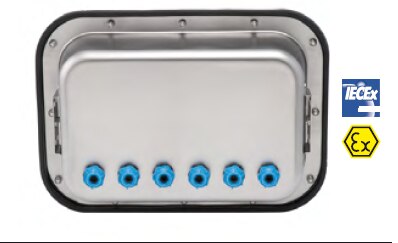 | Atex Atex Approved Weighing Indicator IP68 ATEX/IECEx version (zone 2-22) with 6 cable glands. Dimensions: 206 x 286 x 108 mm (drilling template in case of panel mounting: 160 x 248 mm). View product → |
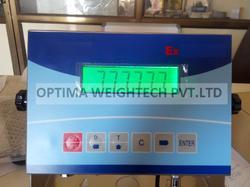 | Intrinsically Safe Weighing Indicator Intrinsically safe indicator is a new-generation weighing Terminal, especially designed for industrial sites such as Petroleum, chemical industry,... View product → |
Frequently asked questions
When does a liquid filling machine need ATEX equipment?
It needs ATEX equipment when the process or product can create an explosive gas, vapour or dust atmosphere where the equipment operates. The liquid itself does not automatically create an ATEX requirement.
Does Zone 2–22 match the physical layout of a filling machine?
No. Zone classifications describe the likelihood and duration of an explosive atmosphere, not a machine’s physical arrangement. Classify the area around the vessel, filling head, vents, pumps, electrical equipment and other release points.
How does an ATEX indicator affect the filling cycle?
The indicator still controls weighing and fill cut-off, but its enclosure, circuits, cable entries and signal connections must suit the classified area. Check whether protective barriers, slower updates or isolation affect response time and accuracy.
Which equipment and documents determine weighing performance?
Review the vessel design, load-cell capacity and arrangement, environmental forces, indicator resolution, calibration records, ATEX marking, installation instructions and conformity documentation.
When is the ATEX premium worth paying?
It is worth paying when a classified hazardous area exists and non-certified equipment could provide an ignition source, invalidate the installation, interrupt production or increase personnel risk. If no explosive atmosphere can form at the equipment location, first verify whether ATEX protection is required.
Keywords