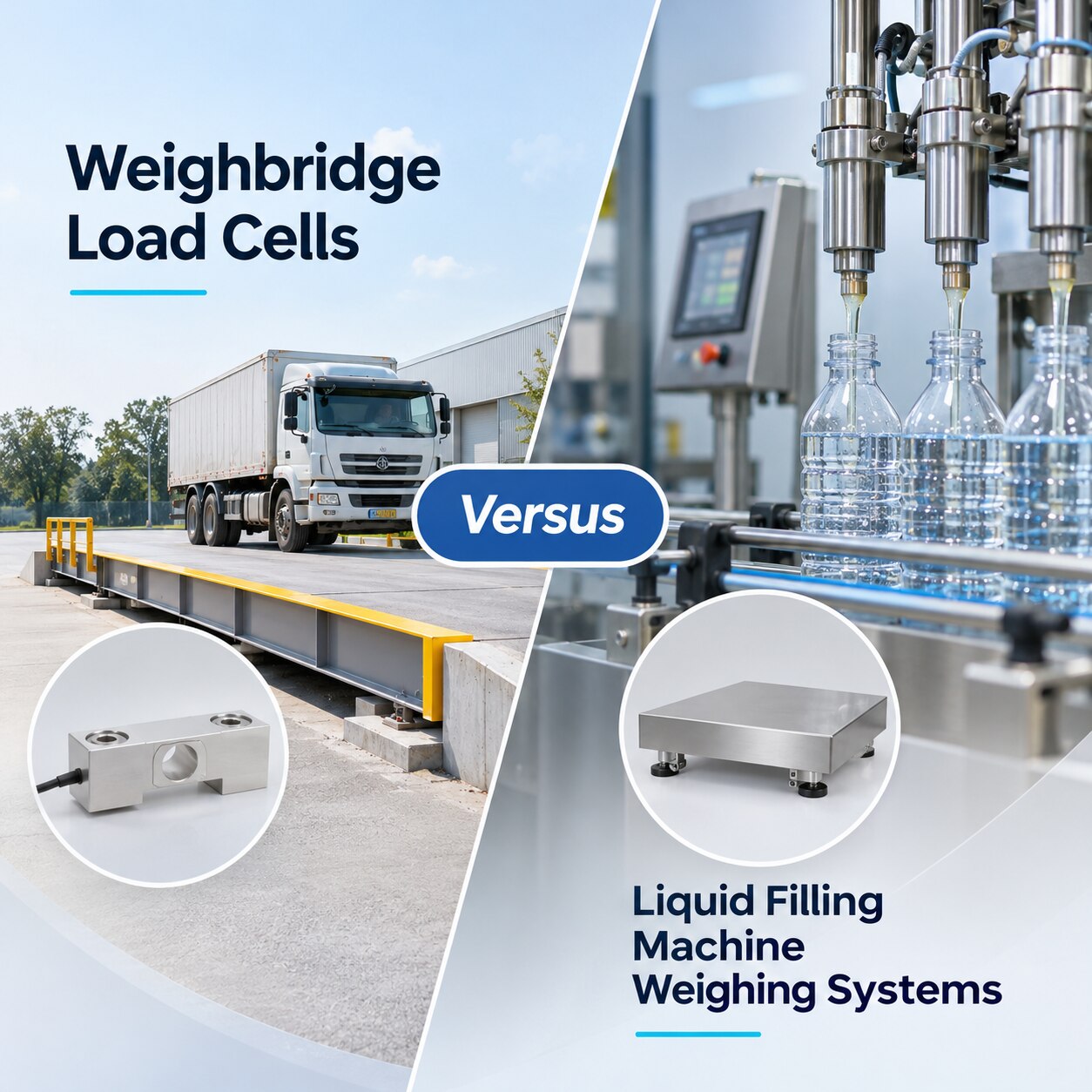
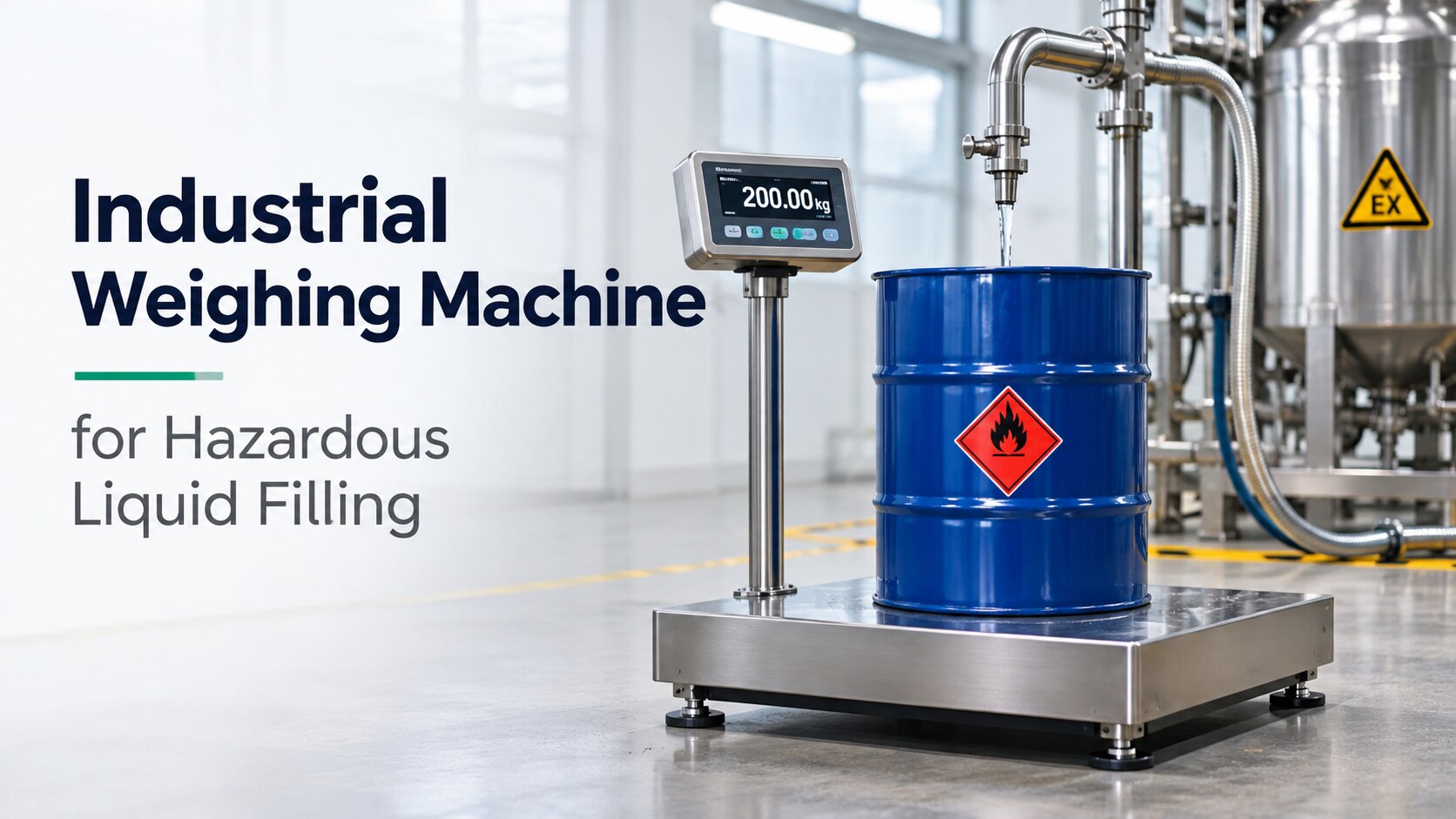
A hazardous liquid filling line must control both the quantity entering each container and the ignition risks around vapour, static charge and electrical equipment. By the end, you will be able to map the filling sequence, compare gravimetric and volumetric methods, and specify a weighing-and-filling installation against the correct hazardous-area certificate.
Key takeaways
- Classify the filling zone and liquid vapour risk before selecting the scale.
- Use intrinsically safe circuits when the area classification requires them.
- Choose weight filling when density changes would undermine volume accuracy.
- Validate the complete system under actual temperature, speed and container conditions.
Classify the filling area before choosing the weighing machine
An industrial weighing machine for a hazardous area is suitable only after you classify the filling location and the liquid’s ignition hazards. Do not select it from capacity and accuracy alone.
A stainless-steel indicator, IP-rated load cell or “air-operated” description does not prove ignition protection; solenoid coils, limit switches, cables, static discharge and hot surfaces still require assessment.
| Classification | What it identifies | Selection consequence |
|---|---|---|
| Zone 0 | Explosive vapour exists continuously or for long periods | Use equipment certified for Zone 0, with the required equipment protection level |
| Zone 1 | Explosive vapour is likely during normal filling | Match the machine and accessories to Zone 1 certification |
| Zone 2 | Explosive vapour is unlikely in normal operation and short-lived if present | Use equipment approved for Zone 2; do not downgrade other circuit requirements |
| Gas group and temperature class | Vapour ignition severity and maximum surface temperature | Match both to the product’s safety data and certificate |
Before requesting an intrinsically safe scale, record:
- The area classification, gas group, temperature class, ambient temperature and enclosure requirement
- The liquid’s flash point, vapour composition, viscosity, conductivity and chemical compatibility
- Container dimensions, filling rate, cleaning method, bonding and earthing provisions
- Whether the weighing instrument makes a sale, custody-transfer or declared-quantity measurement; OIML R 76 approval does not replace hazardous-area certification
- Certificate numbers and a complete circuit assessment covering load cells, junction box, cables, barriers, indicator and controls
Hazardous liquid filling equipment in Vadodara faces the same test as equipment anywhere: the plant dossier and inspection regime—not the supplier’s location—determine compliance.
How the scale controls each filling cycle
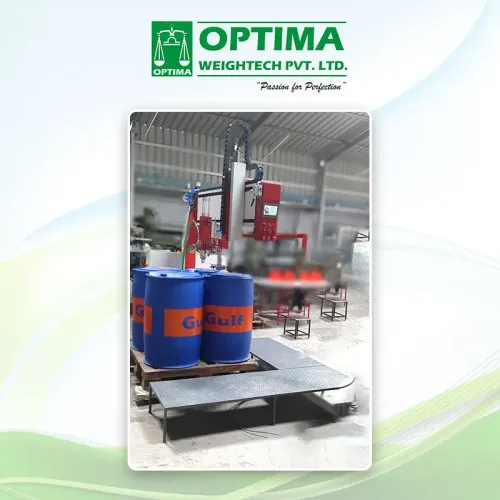
An intrinsically safe scale liquid filling system uses load-cell feedback to turn each container into a controlled sequence rather than simply stopping flow at a displayed number.
Position the container on the platform and hold it against the locator. The controller confirms container presence, waits for a stable reading, and captures the tare with the empty vessel in its actual filling position.
An unsupported hose, nozzle contact, vibration or liquid movement can transmit false force to the load cells, so the system must account for those conditions.
1. Start coarse filling through the main valve or pump to move most of the required liquid quickly.
2. Change to fine filling before the target mass. The controller calculates this changeover from the product, container and validated filling rate.
3. Close the valve or stop the pump before the target mass by the amount expected to remain in the pipe and nozzle. Stopping at the displayed target causes systematic overfill when line residual is significant.
4. Wait for splashing, foam, pump pulsation and slosh to settle, then compare the stable gross weight with the target and permitted tolerance.
5. Record the final result with the container or batch identification. Release the container only after the reading passes; divert an underweight or overweight fill for correction and keep the failed result in the batch record.
When filling by weight beats filling by volume
Choose gravimetric filling when the quantity that matters is mass, or when liquid density changes during production. A volumetric filler delivers the same space occupied; a weighing system delivers the same mass even as temperature, composition or concentration shifts.
| Method | What it measures | Choose it when |
|---|---|---|
| Gravimetric filling | Container weight minus tare | Density, viscosity or temperature varies; batch mass must be controlled; liquids are thick, foaming or difficult to meter consistently |
| Volumetric filling | Set piston, chamber or container volume | The liquid has stable density and viscosity, and speed matters more than correcting mass variation |
| Flowmeter filling | Liquid volume or mass passing the meter | You need high-throughput, closed-pipe transfer and the meter remains accurate across the product’s temperature, viscosity and flow range |
A flowmeter is not automatically a mass measurement. A volumetric meter needs density compensation if the recipe is specified in kilograms; a Coriolis mass-flow meter measures mass directly but adds installation, calibration and cleanability demands.
Weigh in the real operating position. Tare the empty container after positioning it, then control for container variation, hose forces, nozzle contact, vibration and sloshing. An unsupported or kinked hose touching the vessel can transmit a repeatable false force, causing every fill to miss the target.
Choose weight over volume when a rejected batch costs more than the extra settling time, or when traceable mass records matter. Choose volume or flow when density is stable and cycle speed dominates.
Match the complete weighing circuit to the protection method
Verify the complete circuit, not just the stainless-steel indicator or IP-rated load cell. An industrial weighing machine for a hazardous area is acceptable only when its load cells, junction box, cables, indicator, barriers or isolators, and filling controls match the site’s zone, gas group, temperature class and equipment protection level.
Ask the supplier for these records:
- The certificate number and full Ex marking for the indicator, junction box, load cells, barriers or isolators, solenoid coils, switches and other electrical devices.
- The certificate conditions, including permitted ambient temperature, enclosure limits, approved glands, cable type and earthing or bonding requirements.
- The intrinsic-safety entity parameters: barrier output Uo, Io and Po; field-device input Ui, Ii and Pi; and permitted cable capacitance and inductance Co and Lo.
- A loop drawing showing every connection from the load cell to the control cabinet, including segregation from non-intrinsically safe wiring.
- Evidence that the filling PLC, valve controls and emergency-stop circuit use the stated protection method; “air operated” alone does not approve an uncertified solenoid or limit switch.
- Installation, inspection and repair instructions that preserve the certificate configuration.
Compare the documents with the hazardous-area dossier and the applicable IEC, ATEX or local code requirements. A generic “explosion-proof” claim is insufficient. Replacing a gland, indicator or cable can invalidate approval, while pressure-washing a junction box can introduce moisture and weighing drift. Record approved replacement parts and revalidate the circuit after changes.
Specify, install and validate the system for real plant conditions
A specification for an industrial weighing machine hazardous liquid filling in Vadodara must start with the plant’s hazardous-area dossier, not a supplier’s “explosion-proof” label. State the zone, gas group, temperature class, equipment protection level, ambient temperature and certificate numbers required for every electrical component.
Include these purchase and commissioning requirements:
- Product name, SDS details, flash point, viscosity range, density variation, corrosiveness and compatibility of wetted parts, seals, hoses and nozzles.
- Container dimensions, tare range, target mass, permitted error, filling rate, settling time and the required legal-metrology verification.
- Load-cell capacity, indicator type, cable routes, control-panel location, enclosure rating and the protection method for each circuit.
- Closed filling, submerged nozzle, vapour-return connection, ventilation and transfer-rate controls where the liquid can release flammable vapour.
- Bonding points for the tank, pipework, nozzle, container, scale frame and transfer equipment, with continuity-test records.
- Cleaning method, drainability, washdown temperature and access for inspection without opening non-permitted enclosures.
- Batch records containing container ID, tare, target, final weight, operator, time, alarms and calibration status.
Commission with the actual liquid, container and transfer pressure. Test underfilled and overfilled containers, valve shut-off, restart after power loss, emergency stop, zero drift and alarm interlocks. Record calibration results and as-built drawings.
Optima Weightech Pvt Ltd. can help translate the process trial into a documented weighing and filling specification; acceptance still belongs to the site’s safety and inspection regime.
Related products
 | Online Check Weigher The Online Check Weigher is a dynamic, high-precision weighing solution designed for continuous weight verification of packaged products on... View product → |
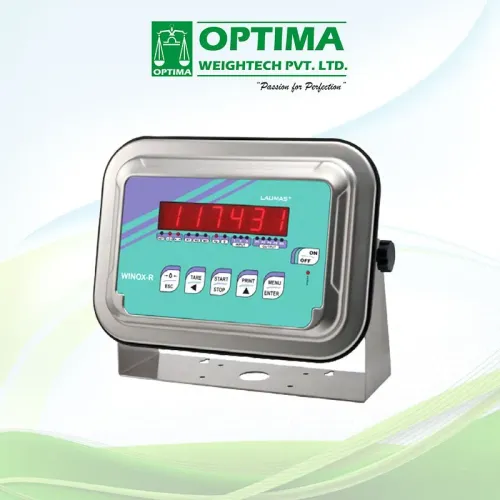
 | Intrinsically Safe Weighing Indicator Intrinsically safe indicator is a new-generation weighing Terminal, especially designed for industrial sites such as Petroleum, chemical industry,... View product → |
Frequently asked questions
What must you classify before choosing a weighing machine for hazardous liquid filling?
Classify the filling area by hazardous-zone requirements and identify the liquid’s flash point, vapour risk and ignition properties before selecting equipment.
How does a weighing machine control each liquid filling cycle?
The controller tares the container, monitors live weight, switches from fast to slow filling near the target, and stops the valve at the programmed setpoint.
When is filling by weight better than filling by volume?
Filling by weight is better when density changes with temperature, composition or batching would make a fixed volume inaccurate.
What parts of the weighing circuit need hazardous-area protection?
Check the load cells, junction box, cable, indicator, controller, barriers, power supply and interfaces as one circuit against the selected protection method.
How should you validate a hazardous liquid filling system?
Test repeatability, cutoff response, grounding, interlocks, container handling and emergency shutdown with the actual liquid, containers, temperatures and operating speeds.
Related product
 | Intrinsically safe indicator is a new-generation weighing Terminal, especially designed for industrial sites such as Petroleum, chemical industry,... View product → |
Keywords