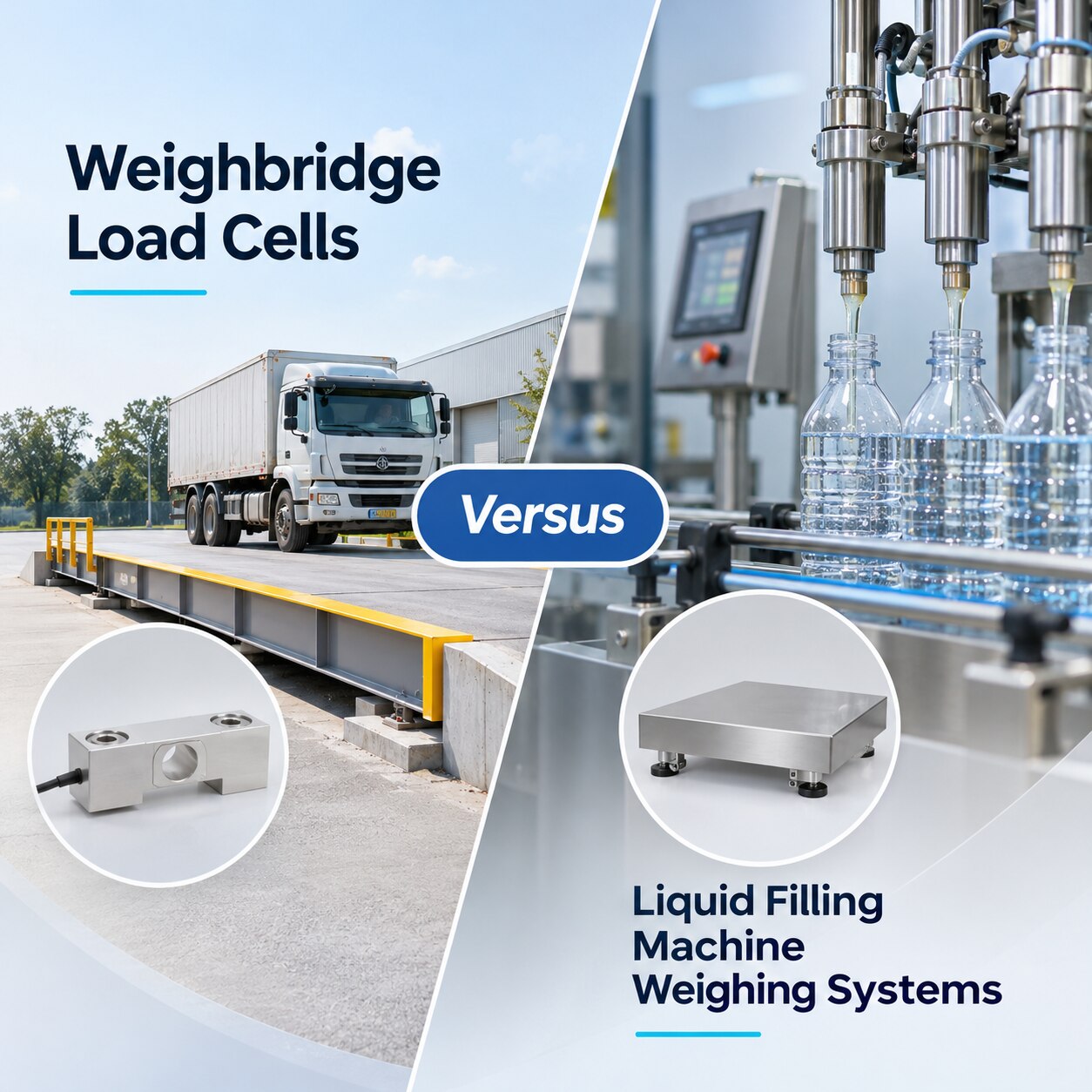
A truck scale and a liquid filler both convert force into a weight reading, but they operate under different loads, time scales and control demands. By comparing their mechanics, signals, capacity and process requirements, you can choose the right system and avoid treating a load cell as an interchangeable component.
Key takeaways
- Choose compression cells for weighbridges and precision cells for filling systems.
- Size filling-system load cells for container weight, product density and target accuracy.
- Specify overload protection, sealing and eccentric-load tolerance before comparing suppliers.
- Digital weighbridge cells simplify diagnostics; analogue cells can suit simpler installations.
Why the two weighing environments require different designs
A weighbridge measures a stationary or slowly moving truck across a large deck supported by four, six or eight compression load cells. The cells feed a junction box that sums their signals before the indicator displays gross vehicle weight. The structure must withstand eccentric loading, approach movement, braking, wind, mud and impact.
Corner-loading tests check equal readings at each deck position, while controlled-clearance restraints stop check rods or bumper stops carrying part of the load.
| Environment | Measurement task | Main design concern |
|---|---|---|
| Weighbridge | Gross truck weight across a large deck | Deck deflection, vehicle position, restraint binding and uneven cell loading |
| Liquid filling machine weighing system | Bottle, vessel, hopper or batch during filling | Valve or pump timing, resolution, drift and stable force paths |
| Control objective | Display a stable total | Reduce bulk flow to dribble flow, then stop before the target |
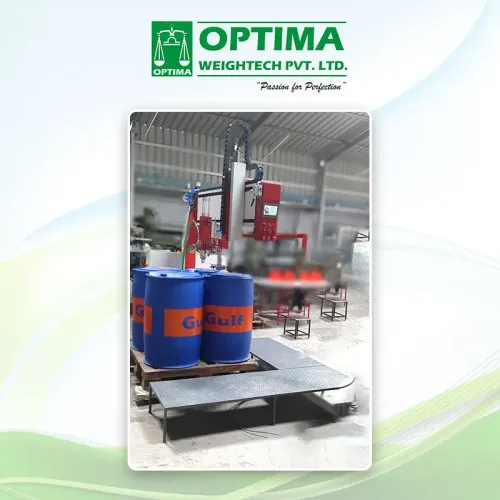
A liquid filling machine weighing system must respond to pump pulsation, splashing, foam, entrained air, nozzle drip and liquid momentum. Its signal controls the dose, not merely the final display.
Therefore, a weighbridge load cell versus liquid filling machine weighing system comparison cannot rely on rated tonnes or accuracy class: OIML R60 covers load cells, while OIML R61 covers complete automatic gravimetric filling instruments.
A high-capacity bridge cell lacks the resolution and response for bottle dosing; a filling cell lacks the capacity, overload protection and outdoor mechanical protection for trucks. Pipework and restraints must not bypass either weighing system.
Why neither load cell can replace the other
Neither load cell can replace the other: a weighbridge cell is built for distributed truck loads, while a load cell for filling machine service is built for a small, fast-changing vertical load.
A weighbridge platform spreads vehicle weight across several high-capacity compression cells. Using one for bottle dosing gives poor effective resolution, and heavy filtering can delay the valve’s bulk-to-dribble change or shutoff. Deck vibration, deflection and alternate force paths can hide the small weight increase from one dose.
A filling-machine cell is unsuitable for trucks because its rated capacity, overload margin and mounting hardware do not cover vehicle impact, eccentric wheel loads or braking forces. It may also lack sealed construction, protected cabling and outdoor resistance; deck movement or binding restraints can make its signal unstable.
Keep a liquid filling machine weighing system on a clean, vertical load path. Check these points before commissioning:
- Support rigid pipes, cable trays, agitators, level switches, guards and tank supports independently.
- Use flexible hose connections with enough length and movement allowance.
- Check that hoses do not pull downward or sideways as they fill, drain, bend or move.
- Keep the vessel and frame clear of unintended contacts.
- Set weighbridge check rods and bumper stops with controlled clearance so restraints carry no vehicle load.
- Confirm that the cell’s capacity leaves room for tare, fittings, vibration and overload, not only the liquid dose.
A large deck is suited to vehicle stability; a filling cell needs sensitivity and rapid control response.[curang]
How to size and control a liquid filling weighing system
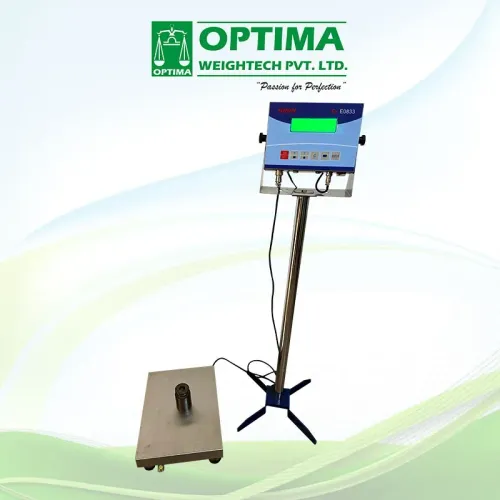
Start with the heaviest complete condition, not the target dose. A load cell for filling machine service must carry vessel tare, structural dead load, fittings, agitator, maximum product mass and transient overload. A 5 kg fill does not justify a 10 kg cell if the empty vessel weighs 18 kg.
1. Record the vessel tare, maximum container mass, target and minimum batch size, and total product mass. Specify the number of cells, weighing range, division size, repeatability, allowable drift and overload margin.
2. Match the cell and controller to filling speed, product viscosity, temperature range, foaming or aeration tendency, pump pulsation and nozzle arrangement. A large cell with a small batch can meet a datasheet accuracy claim yet fail the required division size.
3. Choose gross or tare weighing deliberately. Gross weighing reads the complete loaded vessel; tare weighing records the empty container or vessel, so net fill equals gross weight minus tare.
4. Program bulk flow first, then fine or dribble flow near the target. Close the valve or stop the pump early enough to compensate for product still travelling through the nozzle.
5. Tune preact, or in-flight correction, against valve shutoff delay, line pressure, nozzle drip and product temperature. Repeat those tests at operating speed.
6. Validate repeated fills, not only a static calibration test. Investigate drift caused by hose forces, foam collapse, air pockets, agitator movement or a tank touching its frame. A liquid filling machine weighing system succeeds when its mechanical installation, signal resolution and dosing response agree.
What changes between analogue and digital weighbridge cells
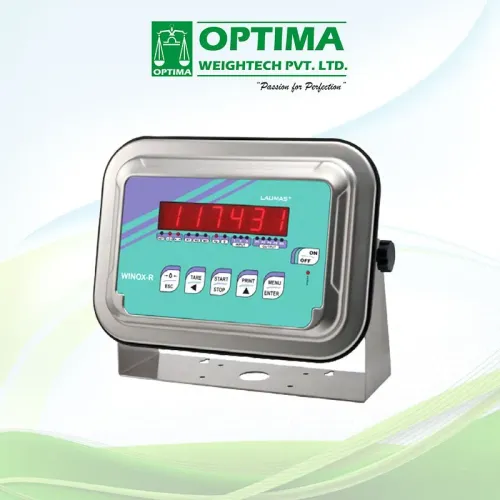
Analogue weighbridge load cells send a low-level millivolt signal to a junction box. Technicians balance corner outputs by trimming that box, then check excitation voltage, signal millivolts, insulation resistance and cell-by-cell resistance during fault finding. Long cables, moisture, lightning and damaged connections can shift the reading. Surge protection, earthing and sensible cable routing matter.
| Option | Signal and diagnosis | Installation and replacement |
|---|---|---|
| Analogue cell | Junction box sums signals; technicians compare millivolts and corner outputs | Match system output, trim corners and repeat corner checks after replacement |
| Digital cell | Converts near the sensor; communicates data, diagnostics, fault codes and communication status | Address correctly and retain sound mounting, surge protection and cabling |
Digital diagnostics can identify an individual cell or bad cable without relying only on millivolt comparisons. They cannot correct a binding restraint, a deck touching its frame or another force bypassing the cells.
For a weighbridge load cell India purchase, ask for:
- Junction box, lightning protection and specified cable length
- The corner-trimming procedure and post-replacement verification method
- The replacement configuration, including digital addressing where applicable
- Whether the scale is process-only or intended for trade use
- Legal-metrology verification and stamping by the competent authority for commercial vehicle weighing in India
A trade-approved scale needs that verification; calibration alone does not establish legal compliance.
The specification that prevents a costly mismatch
A rated capacity is not the usable weighing range. Rated capacity is the maximum force a cell is designed to measure under specified conditions; usable performance also depends on dead-load percentage, overload margin, excitation voltage, rated output, indicator resolution, filtering, mechanical stability and required division size.
In a truck scale, four, six or eight cells share the load, but uneven distribution, corner loading and eccentricity change each cell’s force. In a filler, vessel tare can consume most of the capacity before product enters.
1. State gross weight, tare weight, target and minimum batch size, fill rate, required accuracy, repeatability, product viscosity and temperature range. Size a load cell for filling machine service from tare, structure, fittings, agitator, maximum product load and overload events—not target liquid quantity alone.
2. Record foam or aeration behaviour, pipe and hose layout, washdown chemicals, hazardous-area classification and allowable drift. A rigid pipe, hose pulling downward, or tank touching its frame can defeat an otherwise suitable cell.
3. Specify the calibration method, division size, valve or pump control requirements, and whether the result controls a process or a legally controlled sale. For a weighbridge load cell in India, identify legal-metrology verification and stamping requirements; do not treat a process scale as trade-approved.
Optima Weightech Pvt Ltd. can turn this specification into an installation by checking force paths, commissioning corner or filling tests, tuning valve preact and separating mechanical faults from electrical ones. Ask for documented calibration and acceptance tests using actual loads, fill rates and product conditions.
Related products
 | Truck scale Electronic Weighbridge with an option digital load cell & analog load cell, pit type, pit less type for the capacity upto 200 tons. View product → |
 | Load Cell We are a leading Manufacturer of s-type load cell, weighbridge load cell, single point load cell, compression load cell, stainless steel load cells... View product → |
Frequently asked questions
Why do weighbridge and liquid filling systems need different load-cell designs?
A weighbridge handles truck impact, braking, eccentric loads, weather and structural movement. A liquid filling system prioritises stable readings, fast settling, hygiene and repeatable dose control.
Can a weighbridge load cell replace a load cell for a filling machine?
No. Weighbridge cells are built for large static and dynamic structural loads, while filling-machine cells are selected for container capacity, resolution, settling time and dosing control.
How do you size a liquid filling machine weighing system?
Add the empty container, maximum liquid charge and fixture weight, then allow for off-centre loading and overload protection. Check the resulting capacity against the required resolution and filling tolerance.
What changes between analogue and digital weighbridge load cells?
Analogue cells send low-level millivolt signals to a junction box and indicator. Digital cells perform signal processing within or near the cell, supporting diagnostics and easier fault identification.
Which specification prevents a costly load-cell mismatch?
Match rated capacity, accuracy class, environmental sealing, overload rating, mounting geometry, cable requirements and operating temperature to the actual installation.
Related products
 | Online Check Weigher The Online Check Weigher is a dynamic, high-precision weighing solution designed for continuous weight verification of packaged products on... View product → |
 | Load Cell We are a leading Manufacturer of s-type load cell, weighbridge load cell, single point load cell, compression load cell, stainless steel load cells... View product → |
 | Load Cell We are a leading Manufacturer of s-type load cell, weighbridge load cell, single point load cell, compression load cell, stainless steel load cells... View product → |
 | Load Cell We are a leading Manufacturer of s-type load cell, weighbridge load cell, single point load cell, compression load cell, stainless steel load cells... View product → |
Keywords