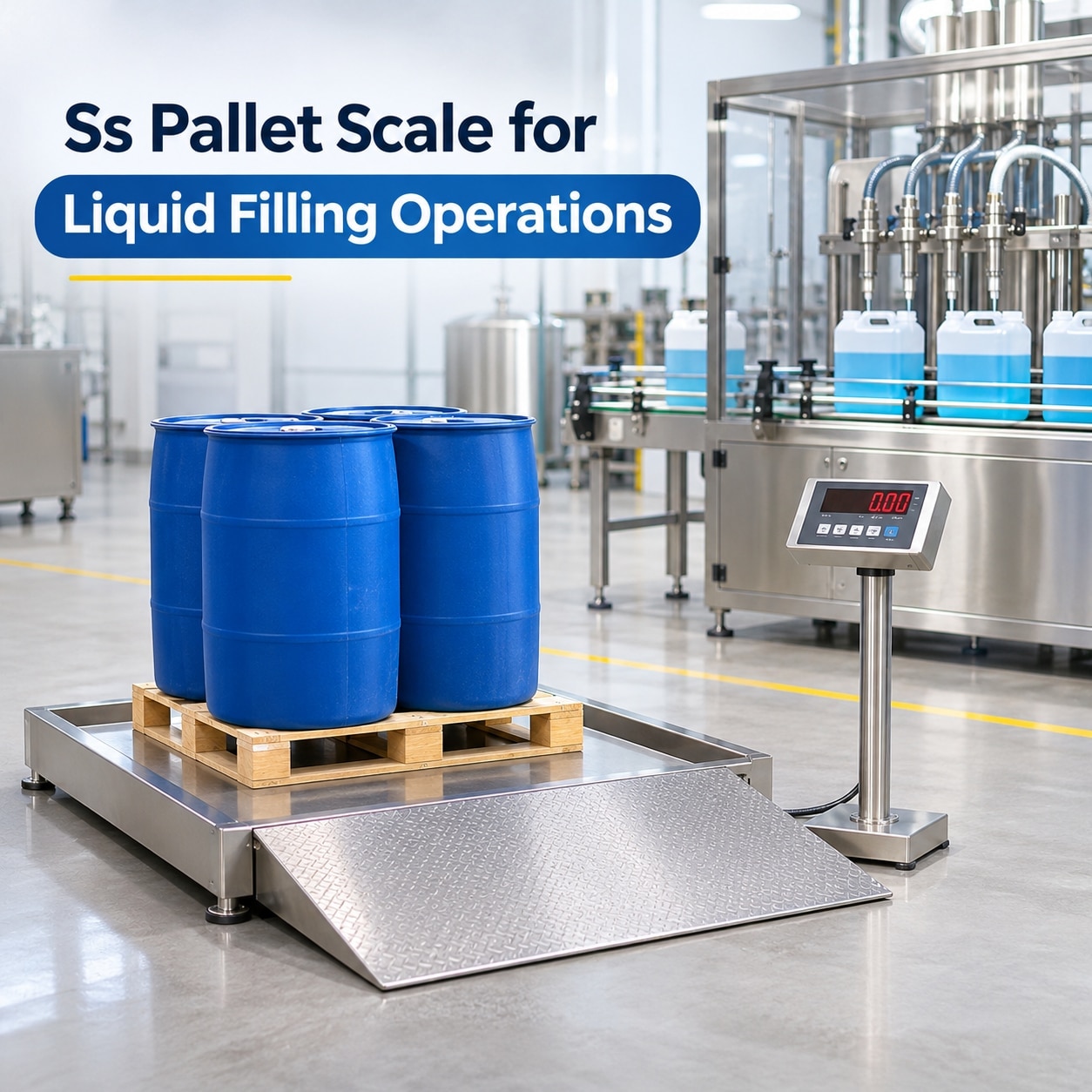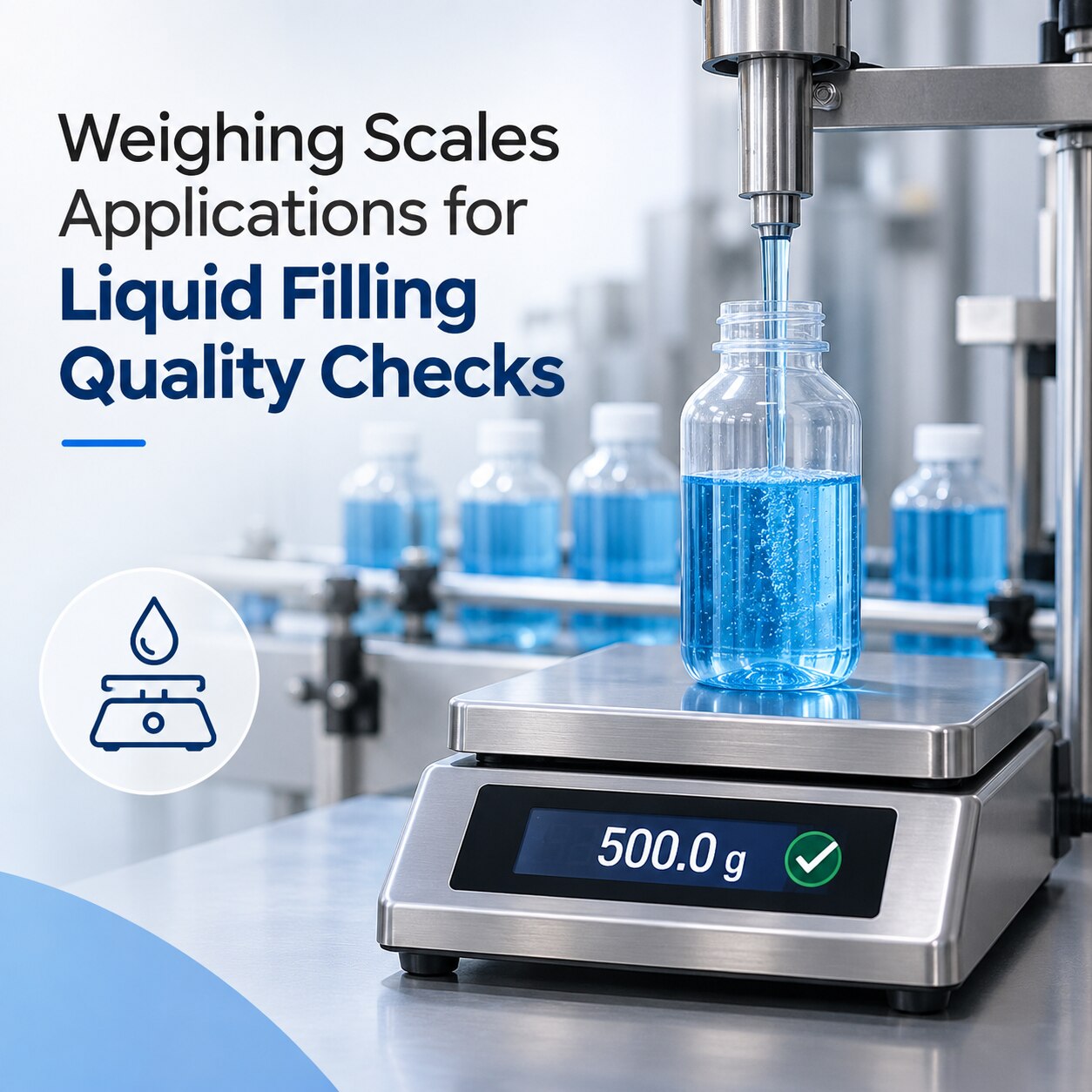
A platform scale that carries the container may still give false fill readings if its capacity, resolution, load-cell arrangement or installation does not match the process. By the end, you will be able to calculate the required specification, decide whether a platform is the right weighing method, and prepare a commissioning and supplier checklist for your production area.
Key takeaways
- Select weighing method using tolerance, cycle time and control method.
- Size capacity for the vessel, product load and impact during placement.
- Specify stainless steel, drainage, washdown protection and protected cable routing.
- Verify zero, repeatability, calibration and interlocks before releasing batches.
Choose the weighing method before choosing the scale
Choose the weighing method from the required process tolerance, cycle time and control method before selecting a scale.
| Option | What it does | Best fit |
|---|---|---|
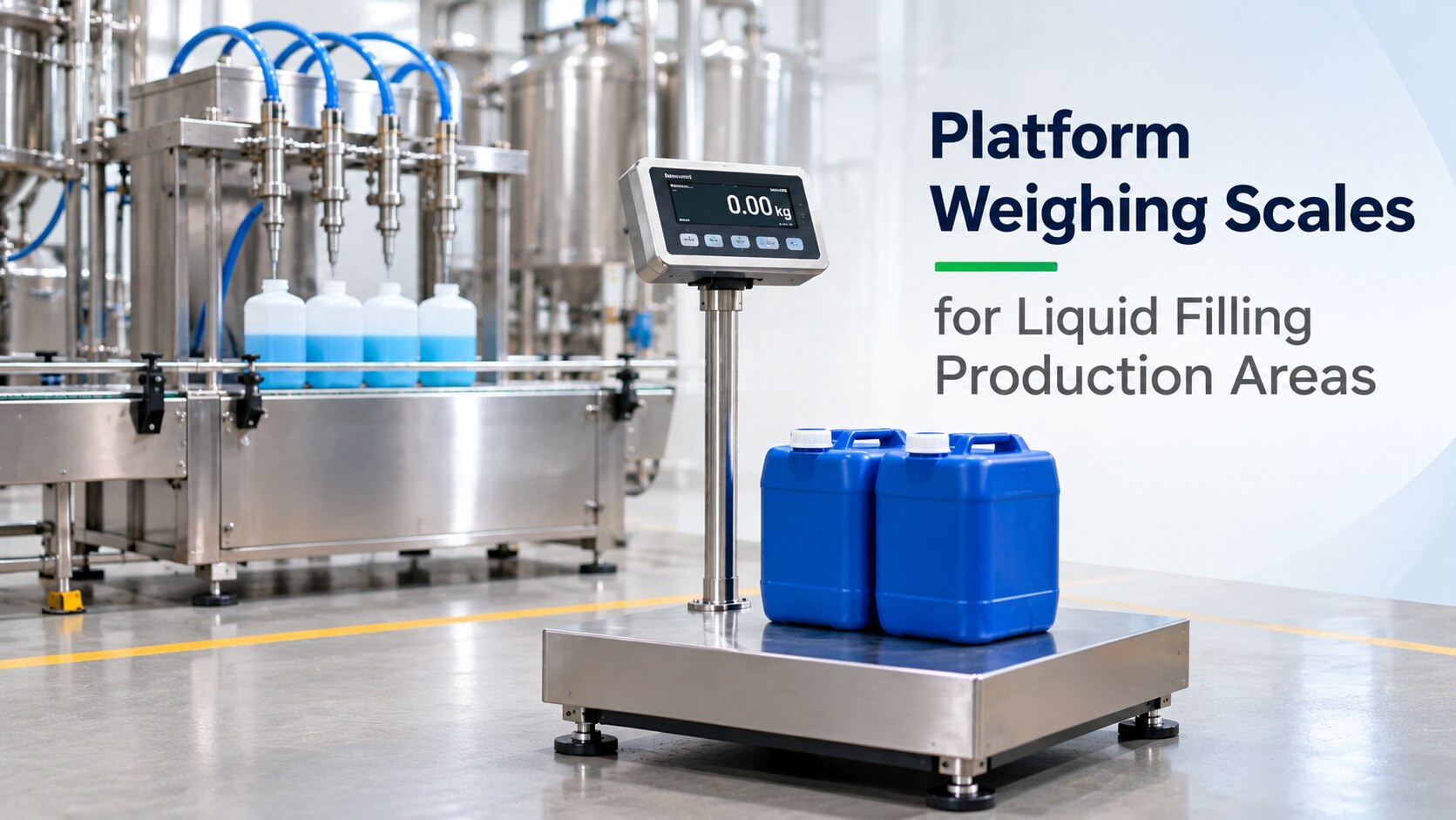
| Platform scale | Weighs a drum, container or vessel after placement | Manual filling, batch verification and slower static weighing after liquid settles |
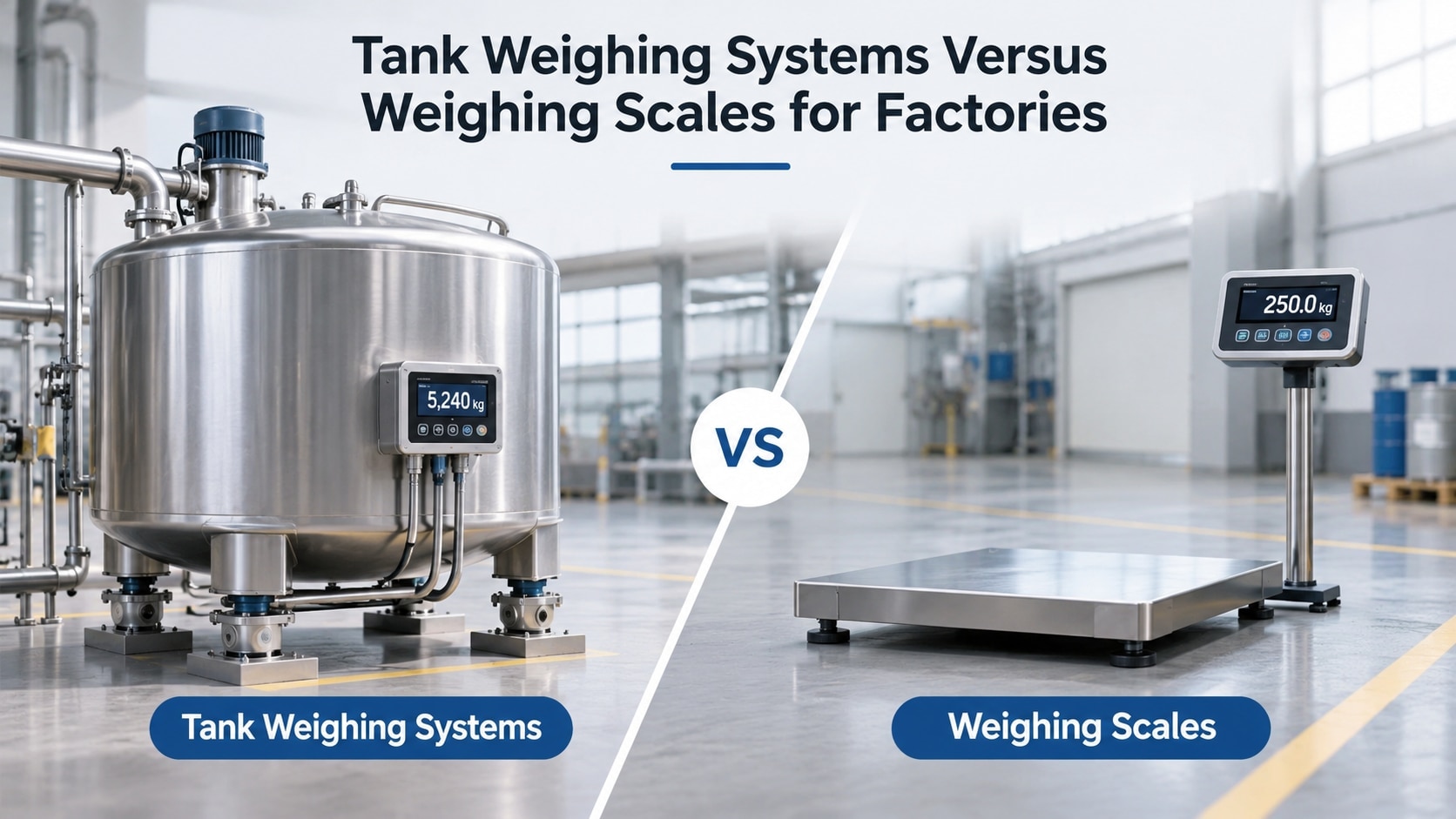
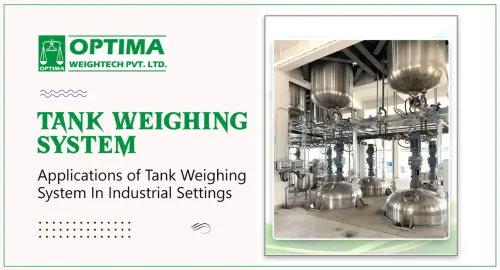
| Tank weighing | Uses load cells beneath a vessel that remains connected to the process | Continuous vessel inventory and controlled filling without disconnecting pipework |
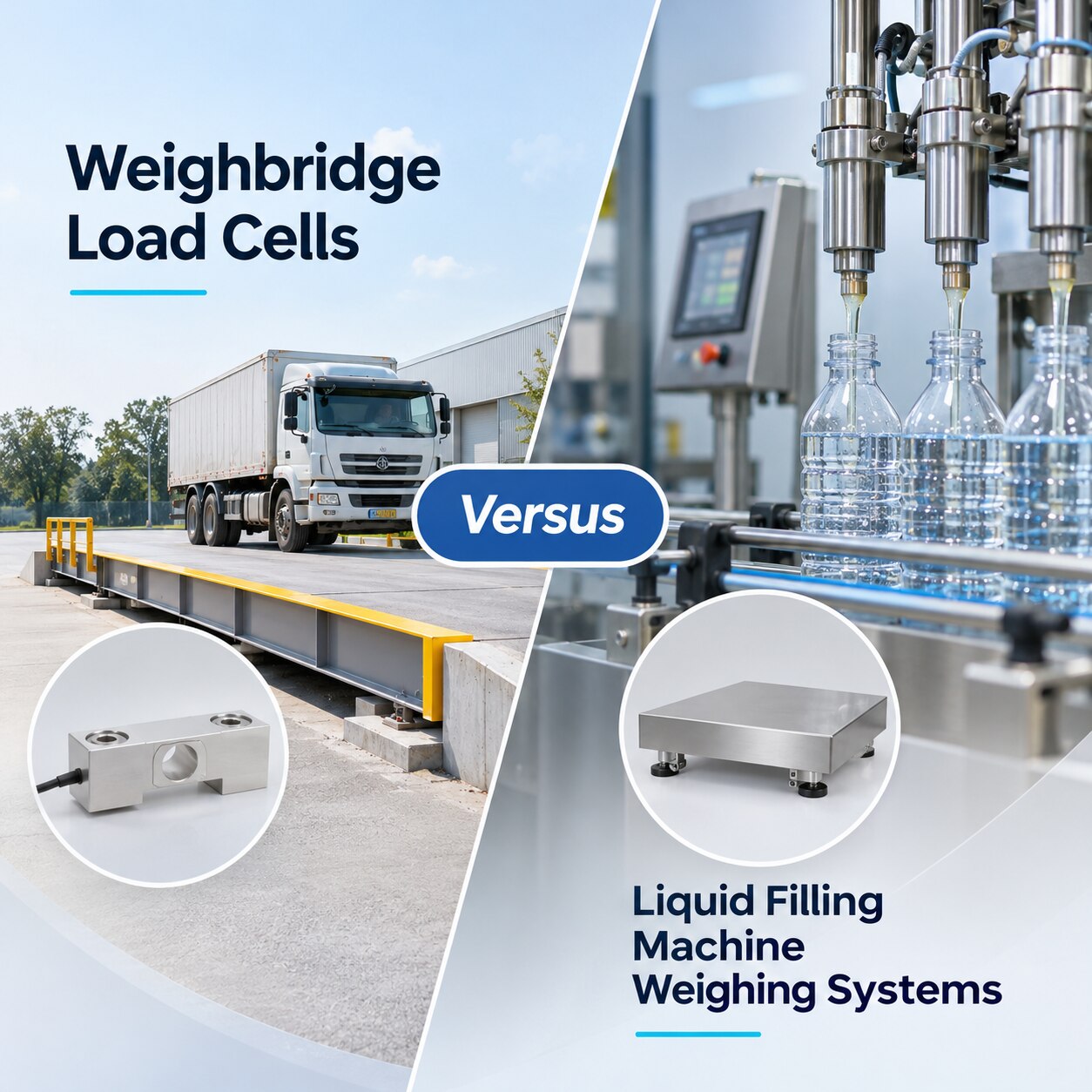
| In-line check weigher | Weighs containers while they move on a conveyor | High-speed production checks, reject control and moving-pack verification |
| Dosing system | Controls flow by time, mass flow or another process signal | Automated filling where the system must regulate the valve or pump |
Static weighing means measuring a stationary load until the reading settles. Dynamic weighing measures a moving container or changing load during production.
A platform scale that reaches an accurate reading after settling is not automatically suitable for stopping a valve or pump. Stabilization time, shutoff delay, residual nozzle drip, foaming, product movement and vibration can turn a correct settled reading into an incorrect fill.
For liquid filling production weighing, specify the required tolerance, cycle time and control signal first; then decide whether the scale measures, verifies or directly controls the fill.
Calculate capacity, resolution and load-cell requirements
Maximum gross load = (fill volume × maximum liquid density) + empty container or vessel tare + fixture weight + defined safety margin. State minimum net load separately: the smallest product mass the scale must control. Then specify target readability and allowable weighing tolerance; do not confuse display increment with accuracy.
Choose capacity from the heaviest real load, not a large catalogue number. Excess capacity can reduce usable resolution at the fill setpoint. Size the platform for drum, IBC or tank footprint, height and access, then check load-centre position, sudden placement impact and each load-cell capacity.
| Platform arrangement | Design checks |
|---|---|
| Four load cells | Leveling, corner-load error, eccentric loading, creep and zero return |
| Single-point cell | Smaller platforms, defined off-centre limits and structural stiffness |
| Tank-mounted cells | Pipe forces, temperature influence, vessel movement and flexible connections |
Request repeatability, temperature-effect data, creep and zero-return results at operating loads. Accuracy Class II and a 1 g display increment do not prove process suitability.
Ask whether the instrument serves internal control or legal-for-trade transactions. For regulated use, request verification status, scale interval, calibration records, sealing details and prescribed test procedures.
Specify gross/net/tare, zero-tracking limits, stable-weight detection, hold, averaging, overload protection, indicator response and PLC communication. Define fail-safe behaviour for unstable weight or signal loss.
Match construction and installation to the wet process area
A correct scale still gives unreliable batches if the installation transmits force to it. Liquid movement, foam, dripping nozzles, pump vibration, air currents, operator contact and container impact can all make the displayed weight wander or settle falsely.
Isolate the platform mechanically from the filling machine, conveyors, guards, rigid pipework and nearby structures. Use flexible hose connections with enough slack, prevent hard contact, level the platform and prepare a flat, load-bearing floor.
Route cables away from pumps and washdown paths, protect load cells from impact, provide drainage, and set access height for safe container handling and cleaning.
| Platform material | Cleaning and exposure | Maintenance consequence |
|---|---|---|
| Stainless steel | Frequent washdown, corrosive chemicals or strict hygiene | Higher initial cost; lower repainting and corrosion work |
| MS (mild steel) | Dry areas, limited cleaning and low chemical exposure | Lower initial cost; coating damage, rust and more maintenance |
IP67 means protection against dust ingress and temporary immersion under specified test conditions. It does not prove hygienic design or suitability for every pressure, temperature or chemical washdown.
Specify the rating for the complete installation: load cells, junction box, glands, connectors, indicator and frame. In food, pharmaceutical and personal-care areas, reject liquid traps, crevices, exposed threads and inaccessible undersides. Check stainless steel against the formulation and cleaning agents.
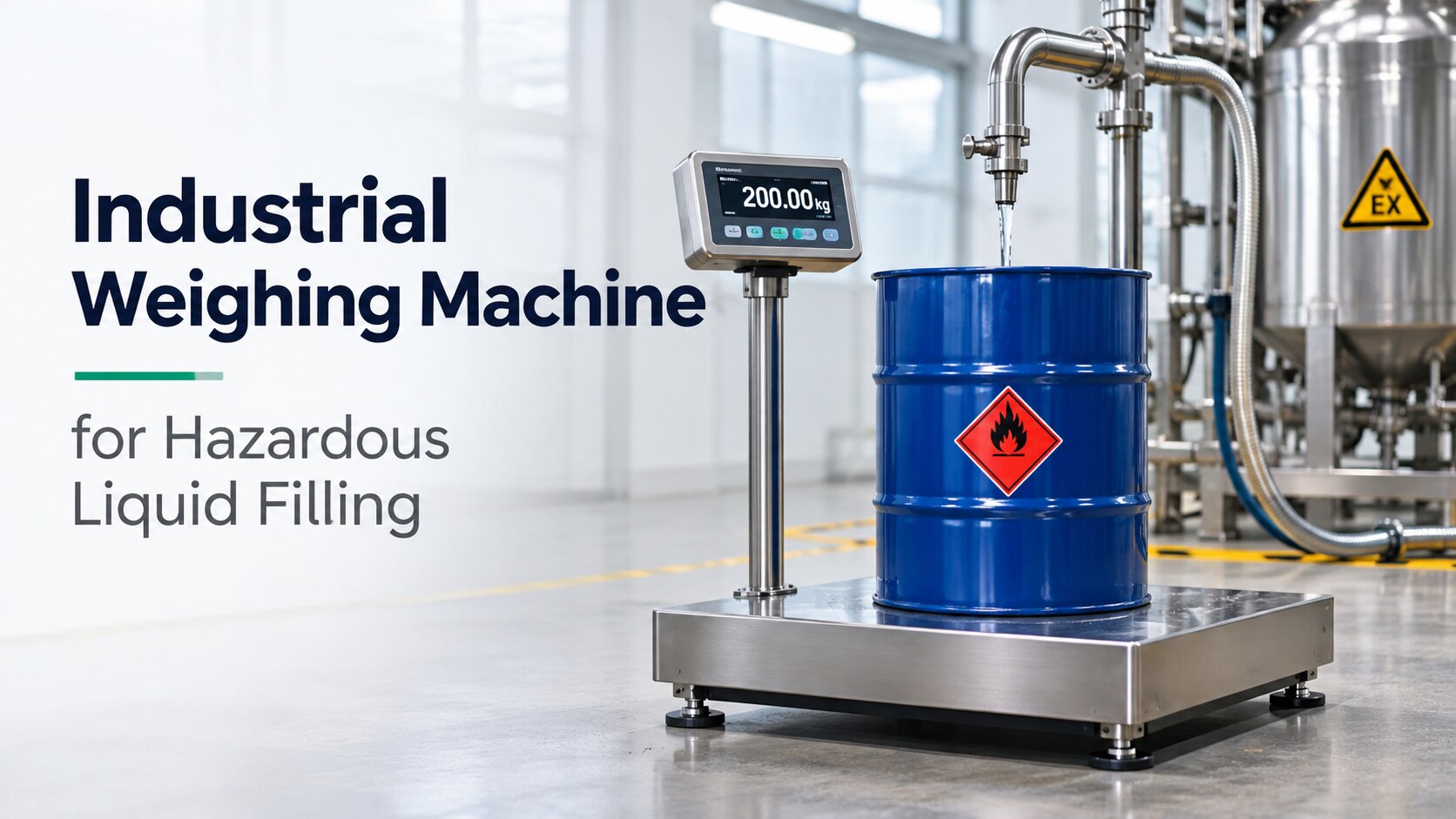
For solvents or other flammable liquids, obtain the area classification before selecting equipment. Require certified components, barriers, grounding, cabling and installation details for the complete weighing system; a sealed indicator alone is not sufficient.
Commission, verify and operate the scale without creating false batches
Prove the installed scale under real filling conditions, not by displaying zero. Use traceable certified weights covering the operating range and record each result.
- Empty the platform, confirm zero stability, then apply certified weights at representative fill weights. Repeat each load and record repeatability, zero return after unloading, and stable-weight or unstable-weight alarms.
- Place the test load at each corner and at the centre. Compare eccentric-load readings with the supplier’s acceptance limits.
- Compare scale readings with filled containers across the working range. Check that containers do not touch the platform, guards or surrounding structure, and that hoses and pipes have slack without pulling on the vessel.
- Repeat checks during pump operation. Investigate vibration, foaming, spilled liquid and nozzle movement before accepting a batch result.
| Check | Control | Record |
|---|---|---|
| Tare | Store tare by container type; confirm it after every container change | Container ID, tare and operator |
| Zero tracking | Set and document the permitted limit; prevent tracking during a live fill | Zero and gross/net values |
| Batch | Reject unstable or out-of-tolerance fills; do not overwrite results | Batch record and rejection reason |
| Status | Fit a calibration label and retain cleaning records | Date, due date and cleaning event |
Set a defined calibration interval, then repeat verification after relocation, cleaning damage, temperature changes, overload or mechanical disturbance. Budget for ramps, civil work, drainage, electrical supply, certified weights, hazardous-area equipment, PLC integration, calibration visits, cleaning downtime and replacement load cells.
Request a site-specific specification from a Vadodara supplier
Before accepting a quotation, require an industrial platform scale supplier in Vadodara to document the scale against your actual filling area, not just quote catalogue capacity.
1. Request a written specification stating maximum gross load, minimum working load, platform dimensions, readability, tolerance, repeatability and eccentric-load results. Include load-cell type and capacity, material grade, indicator construction, complete-installation IP rating, calibration method, legal-for-trade status, data interfaces, overload protection, warranty, spare-parts availability and installation scope.
2. Require a site survey covering floor flatness, drainage, washdown pressure and chemicals, ambient temperature, electrical supply, hazardous-area classification, pipe and hose routing, platform access and vibration sources. The supplier must explain how it will isolate hose forces, level the platform and protect the load cells.
An IP number on an indicator cannot replace evidence from the complete installation.
3. Put responsibilities and response times in the quotation: who will level and commission the scale, supply certified test weights, issue calibration documentation, respond to breakdowns and perform preventive maintenance. Include commissioning, calibration, replacement load cells and integration with the filling or batch-control system, including stable-weight, tare, overload and signal-failure behaviour.
Use this identical checklist for Optima Weightech Pvt Ltd and every local provider when comparing platform weighing scales for liquid filling machine in Vadodara. Reject any offer that cannot identify site-specific assumptions, service coverage and written breakdown response times.
Related products
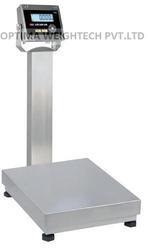
 | Fully Stainless Steel Platform Scale Ask For Price Fully stainless steel platform scale with IP 67 protection, upto 5000kg Capacity View product → |
 | Capacity Range : upto 5000kg Accuracy Class : II Platform Type Bench Type Available in various combination : ABS indicator with SS Load Plate and MS... View product → |
Frequently asked questions
How do you choose a weighing method for liquid filling?
Choose it from the required process tolerance, filling cycle time and whether the controller uses gross, net or loss-in-weight control.
How do you calculate platform scale capacity and resolution?
Add the vessel tare, maximum liquid load and placement impact, then select resolution that supports the required filling tolerance without exceeding load-cell capacity.
What construction features suit a wet liquid filling area?
Use corrosion-resistant stainless steel, sealed load cells, washdown protection, drainage-friendly surfaces and protected cable routing.
How do you commission a scale without creating false batches?
Check zero stability, repeatability, calibration, vessel placement, controller interlocks and batch records before production release.
What should you request from a Vadodara scale supplier?
Request a site-specific specification covering capacity, resolution, vessel dimensions, process tolerance, washdown conditions, controls, installation and service access.
Related product
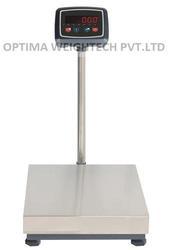 | Capacity Range : upto 5000kg Accuracy Class : II Platform Type Bench Type Available in various combination : ABS indicator with SS Load Plate and MS... View product → |
Keywords